West Palm Beach Family Dental provides root canal treatment in West Palm Beach to remove infected tooth pulp, disinfect the root canal system, and save the natural tooth.
Root canal treatment relieves infection-driven tooth pain and reduces the need for extraction, so patients can restore chewing comfort and protect bite stability.
Dr. Michael Berglass, DDS provides restorative dental care backed by 25+ years of clinical experience.
West Palm Beach Family Dental evaluates tooth pain with an exam and diagnostic imaging when needed, so the treatment plan matches the clinical cause before treatment begins.
A root canal is a restorative dental procedure that removes inflamed or infected pulp from inside a tooth, then cleans, disinfects, fills, and seals the canal space to reduce reinfection risk.
The American Association of Endodontists explains root canal treatment as a method to eliminate bacteria from infected canals and save the natural tooth.
Root canal treatment becomes necessary when deep decay, cracks, or trauma allow bacteria to reach the pulp.
Mayo Clinic describes root canal treatment as a way to save a badly damaged or infected tooth by removing diseased pulp and often placing a crown afterward.
Root canal treatment removes infection inside the tooth and preserves tooth structure, so the dentist can restore the natural tooth instead of removing it.
Root canal symptoms often cluster around pain, sensitivity, and localized inflammation.
Early evaluation matters because some teeth remain treatable if addressed before structural damage becomes severe.
Patients can request an evaluation through our contact form and phone line so our team can assess symptoms and recommend next steps.
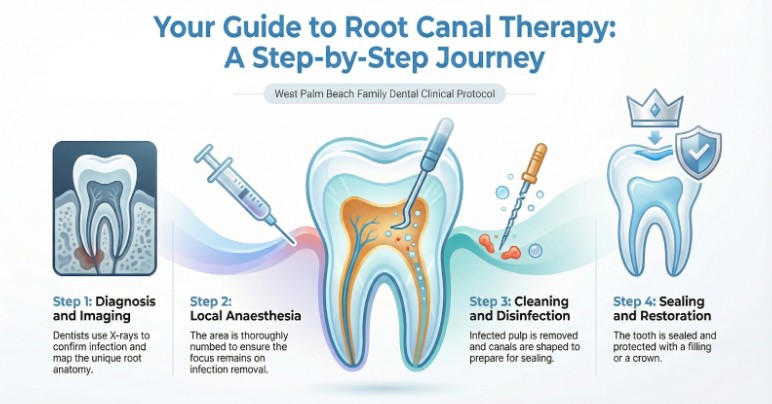
West Palm Beach Family Dental follows a structured root canal process designed for infection control and tooth preservation.
Patients who need structural protection after treatment often restore the tooth with crowns and bridges so the tooth can handle long-term chewing forces.
Modern root canal treatment typically feels similar to a routine filling because local anesthesia numbs the area during care.
Mild soreness can occur afterward as the tissue settles, and our team provides clear aftercare guidance to support recovery.
An ADA-backed patient education resource explains that root canal treatment uses local anesthesia and is generally comfortable for many patients in its root canal overview.
If one tooth hurts when you bite or hot and cold sensitivity lingers, call now. Early treatment often saves more tooth structure and stops infection from getting worse.
Root canal treatment is the infection-control step, and restoration protects the tooth afterward.
Patients who need long-term protection after treatment often choose crowns and bridges so the treated tooth remains functional.
Patients can schedule follow-up guidance through contact us so the team can assess symptoms and recommend next steps.
Root canal treatment can reduce the likelihood of tooth extraction by saving the natural tooth. Preserving the natural tooth can reduce the need for replacement options that follow extraction.
When a tooth cannot be saved, treatment planning may shift to tooth extraction, and replacement planning may include dental implants when a fixed option is preferred.
Root canal cost depends on clinical complexity and restoration needs rather than a single flat fee.
A consultation provides a written plan with restoration recommendations, so total cost aligns with the tooth’s structural needs.
West Palm Beach Family Dental focuses on diagnosis accuracy, comfort planning, and predictable restoration.
Swelling, pressure, or a bad taste can signal an active infection. Contact us today for an urgent evaluation and next-step care.
How long does a root canal take?
Many root canal appointments take about 60 to 90 minutes, and some cases require a second visit based on infection severity and canal anatomy. A dental exam and imaging determine the likely visit count.
How long does a root canal last?
A properly treated tooth can last for many years when the tooth has a stable restoration and the patient maintains oral hygiene. Longevity depends on bite forces, crown integrity, and gum health around the tooth.
Will I need a crown after a root canal?
Many back teeth need a crown after root canal treatment because chewing forces can fracture weakened tooth structure. A dentist confirms whether a crown or a filling is the best restoration based on remaining enamel and bite load.
How long will my tooth last after a root canal?
A root canal treated tooth can last for many years with good hygiene, a stable restoration, and routine dental visits. Longevity depends on bite forces, crown integrity, and gum health around the tooth.
Is a root canal better than extracting the tooth?
Saving the natural tooth often preserves bite function and reduces the need for replacement, but the best option depends on remaining tooth structure and infection risk. A consultation determines whether the tooth is restorable or whether extraction is safer.
What are the signs that I might need a root canal?
Persistent toothache, lingering hot or cold sensitivity, gum swelling, tooth discoloration, and recurring gum pimples near one tooth commonly signal pulp infection. A dental exam and X-ray confirm whether a root canal is needed.
Can I drive after a root canal?
Most patients can drive after a root canal when treatment uses local anesthesia only. Patients who receive sedation should arrange a ride home. The dental team confirms the safest plan based on anesthesia choice.
Can I go to work after a root canal?
Many patients return to normal activities the same day or the next day, depending on soreness and the complexity of the case. Patients with significant swelling or fatigue may prefer rest. The dentist provides guidance based on symptoms.
What if the tooth hurts months after a root canal?
Pain months later can indicate reinfection, a bite issue, or a crack in the tooth. A dental exam and imaging identify the cause and guide next-step treatment. Prompt evaluation reduces complication risk.
Do I need antibiotics for a root canal?
Antibiotics are not automatically required for every root canal case. A dentist prescribes antibiotics based on infection spread risk, swelling, and patient health history. A consultation determines whether antibiotics are appropriate.
About Dr. Berglass

Dr. Michael Berglass, a dedicated dentist with over 25 years of experience, specializes in dental implants, cosmetic, and general dentistry in Boynton Beach, Florida. A proud alumnus of Stony Brook School of Dental Medicine (DDS, 1996), Dr. Berglass further honed his expertise with residencies in general practice and dental implants at North Shore-Long Island Jewish Hospital. His journey in dentistry has taken him from New York to North Carolina, and now to Florida, where he continues to offer top-notch dental care. Known for his wit and intellect, Dr. Berglass makes every patient's visit comfortable. A member of the American Dental Association and Florida Dentists' Association, he stays at the forefront of dental advancements. Dr. Berglass is committed to providing exceptional care and looks forward to welcoming you to his practice.
About Dr. Cedenos

is originally from Cuba where he did his dental studies. Having graduated with a DDS diploma gave Ivan and his family great satisfaction, considering he comes from a family of dedicated dental care professionals. After years of practicing Dentistry in Cuba for a few years, Ivan decided to continue his growth journey as a professional in the United States. Early on, Ivan worked as a laboratory technician, which gave him some unique insights that dental school does not teach. Having graduated from the University of Puerto Rico as a DMD, Ivan is allowed to practice in the USA.


