Originally published: December 2024 | Updated: June 2026 | Reviewed by Dr. Michael Berglass, DDS
West Palm Beach Family Dental provides dental crowns and dental bridges in West Palm Beach to repair damaged teeth and replace missing teeth with fixed restorations. Crowns protect weakened teeth after decay, fractures, or root canal treatment.
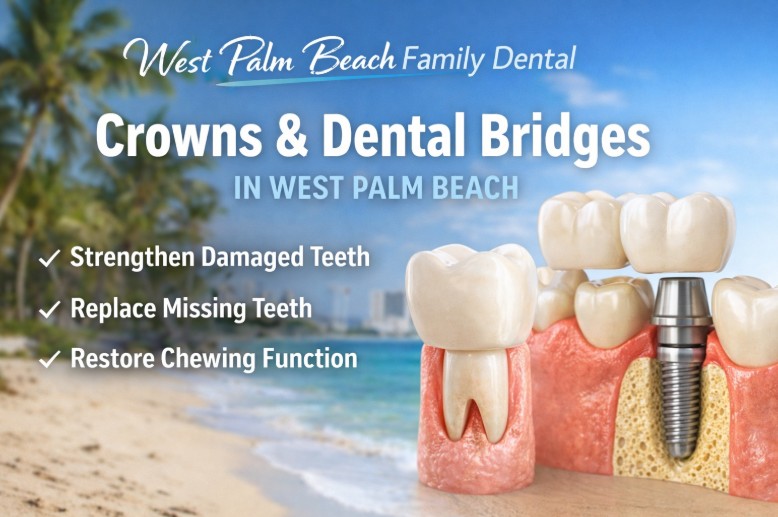
Bridges replace one or more missing teeth by anchoring to adjacent teeth or implants, so patients can chew and speak more comfortably.
Dr. Michael Berglass, DDS provides restorative dentistry backed by 25+ years of clinical experience.
Dr. Berglass earned his DDS from Stony Brook School of Dental Medicine (1996) and completed residency training that included dental implant care.
West Palm Beach Family Dental plans crowns and bridges using diagnostic imaging and bite evaluation, so restorations fit correctly and function predictably.
A dental crown is a custom cap that covers a damaged or heavily restored tooth, so the tooth regains strength, shape, and bite stability.
A dental bridge is a fixed restoration that replaces a missing tooth with a pontic supported by adjacent teeth or implants, so the gap does not compromise chewing or speech.
Some teeth require endodontic treatment before a crown. A dentist evaluates whether root canal treatment is needed when decay or infection affects the tooth pulp, so the crown restores a stable foundation rather than masking an active problem.
Crowns and bridges solve structural and functional issues caused by decay, fractures, failed fillings, and missing teeth.
Most patients qualify when the supporting tooth structure and gums are stable.
When gum health needs improvement before restorative work, care can begin with gum disease treatment so the restoration margins sit in healthier tissue.
Crowns and bridges restore function and appearance when the restoration fits properly and the bite is aligned.
Some cases benefit from tooth replacement that does not rely on adjacent teeth. A consultation may include implant-based options through dental implants when long-term support is the priority.
Crown and bridge pricing depends on the number of teeth involved, materials selected, and the complexity of tooth preparation.
A single crown usually costs less than a bridge because a bridge includes multiple units and requires additional fitting and bite calibration.
A consultation confirms whether a bridge needs implant support, so the cost reflects the actual structure required for stability.
Material selection depends on tooth location, bite forces, and cosmetic goals.
A dentist recommends the best material based on function and appearance, so the restoration fits both the bite and the smile line.
Use this comparison to match the restoration to function, tooth structure, and long-term support.
| Option | Best For | What It Does | Impact On Adjacent Teeth | Bone Support | Typical Visits |
| Crown | Damaged or weakened tooth | Covers and strengthens an existing tooth | None | No | 2 |
| Bridge | One or more missing teeth | Replaces missing teeth using anchors | May require shaping adjacent teeth | No | 2–3 |
| Implant | Missing tooth replacement | Replaces the root and supports a crown | Does not rely on adjacent teeth | Yes | Varies |
Many crowns and bridges last 10 to 15 years or longer with good hygiene and regular dental visits. Longevity depends on gum health, bite forces, and daily maintenance at restoration margins.
Teeth grinding can shorten restoration lifespan by increasing stress on the crown or bridge. Smoking and high-sugar diets increase decay risk around restoration edges.
Daily brushing, interdental cleaning, and professional cleanings help protect the margins and pontic areas, so restorations remain stable longer.
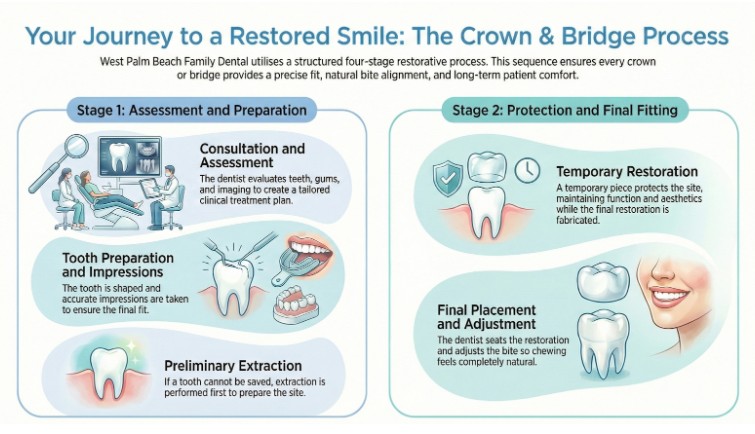
West Palm Beach Family Dental uses a structured process designed for fit, bite alignment, and comfort.
The dentist evaluates the tooth, gums, and bite and reviews imaging when needed, so the treatment plan matches the clinical condition.
The dentist prepares the tooth for retention and takes impressions, so the final crown or bridge fits the prepared structure accurately.
A temporary crown or bridge protects the prepared site, so patients maintain function and aesthetics while the final restoration is fabricated.
The dentist seats the restoration, checks contacts and bite alignment, and makes adjustments, so chewing feels natural and the restoration sits comfortably.
If a tooth cannot be saved and must be removed before restorative planning, care can begin with tooth extraction so the treatment plan is based on the correct site condition.
These steps protect restoration margins and support gum health.
What is the difference between a crown and a bridge?
A crown covers and protects a damaged tooth, while a bridge replaces a missing tooth using anchors on adjacent teeth or implants. Crowns restore strength to an existing tooth. Bridges restore chewing contact across a gap, so teeth are less likely to shift.
How do I know if I need a crown?
A dentist often recommends a crown when a tooth has a large filling, crack, fracture risk, or has had root canal treatment. A crown protects weakened tooth structure, so the tooth can tolerate normal bite forces. An exam and imaging confirm whether the tooth is restorable.
How do I know if I need a bridge?
A bridge is commonly used when one or more teeth are missing and adjacent teeth can support the restoration. A bridge restores bite contact and reduces tooth drifting, so chewing and speech feel more stable. A consultation determines whether the anchors are strong enough.
How long does a crown take?
Most crowns require two visits. The first visit includes evaluation, preparation, and impressions, plus a temporary crown. The second visit seats the final crown and adjusts the bite, so the crown feels comfortable during chewing.
How long does a bridge take?
Most bridges require two to three visits. The dentist prepares the anchor teeth, takes impressions, and places a temporary restoration. The final visit seats the bridge and adjusts the bite, so the bridge fits securely and functions predictably.
Do crowns and bridges hurt?
Local anesthesia reduces discomfort during preparation. Mild soreness or sensitivity can occur afterward, especially around temporary restorations. Bite adjustment and aftercare guidance usually resolve persistent sensitivity when addressed early.
How long do crowns and bridges last?
Many crowns and bridges last 10 to 15 years or longer with good hygiene and regular dental visits. Longevity depends on gum health, bite forces, and cleaning around restoration margins. Grinding and high decay risk can shorten lifespan.
Can a crown be placed after a root canal?
Yes. Dentists often place a crown after root canal treatment because the tooth can become more brittle. A crown protects the tooth from fracture, so the tooth remains functional long term. A dentist confirms timing based on healing and tooth structure.
How do I clean under a dental bridge?
Bridge hygiene requires cleaning under the pontic area with floss threaders or interdental tools. Daily cleaning reduces plaque and inflammation under the bridge, so gums remain healthier and odor risk decreases. Regular cleanings help maintain long-term stability.
Are implants better than bridges?
Implants can replace a missing tooth without relying on adjacent teeth, and implants support jawbone loading. Bridges can be an effective fixed solution when adjacent teeth already need crowns or when timelines differ. A dentist recommends the best option based on tooth structure, bone support, and budget.
A consultation confirms whether a crown, bridge, or implant-supported option best matches your tooth structure and bite. Patients can request an appointment through contact options so our team can schedule an evaluation.
About Dr. Berglass

Dr. Michael Berglass, a dedicated dentist with over 25 years of experience, specializes in dental implants, cosmetic, and general dentistry in West Palm Beach, Florida. A proud alumnus of Stony Brook School of Dental Medicine (DDS, 1996), Dr. Berglass further honed his expertise with residencies in general practice and dental implants at North Shore-Long Island Jewish Hospital. His journey in dentistry has taken him from New York to North Carolina, and now to Florida, where he continues to offer top-notch dental care. Known for his wit and intellect, Dr. Berglass makes every patient's visit comfortable. Formerly a member of the American Dental Association and the Florida Dental Association, Dr. Berglass remains committed to staying informed about advancements in dentistry and providing exceptional care to his patients. He looks forward to welcoming you to his practice.
About Dr. Cedenos

Dr. Ivan Cedeno is originally from Cuba where he did his dental studies. Having graduated with a DDS diploma gave Ivan and his family great satisfaction, considering he comes from a family of dedicated dental care professionals. After years of practicing Dentistry in Cuba for a few years, Ivan decided to continue his growth journey as a professional in the United States. Early on, Ivan worked as a laboratory technician, which gave him some unique insights that dental school does not teach. Having graduated from the University of Puerto Rico as a DMD, Ivan is allowed to practice in the USA.


